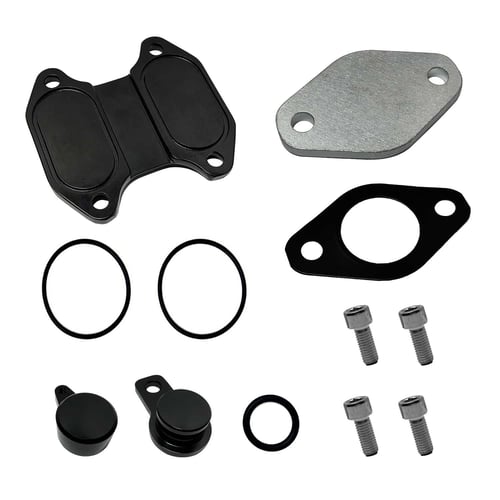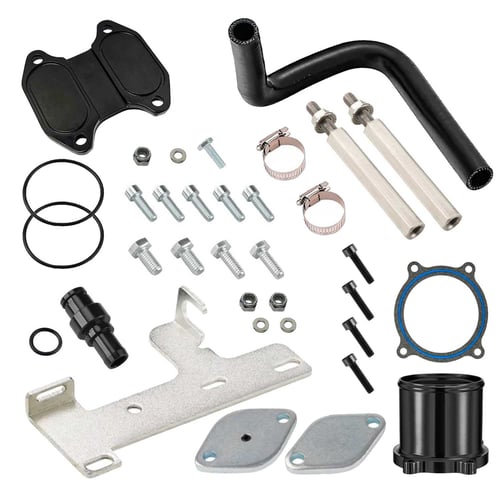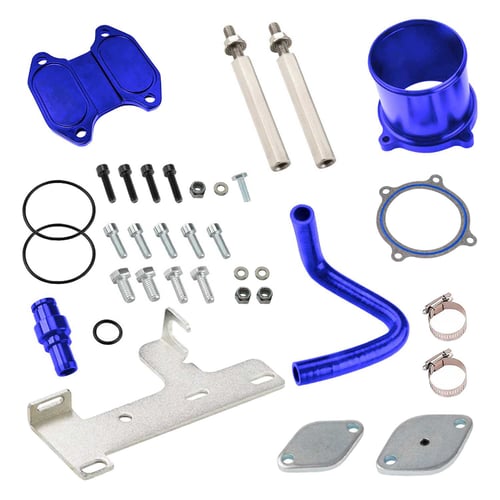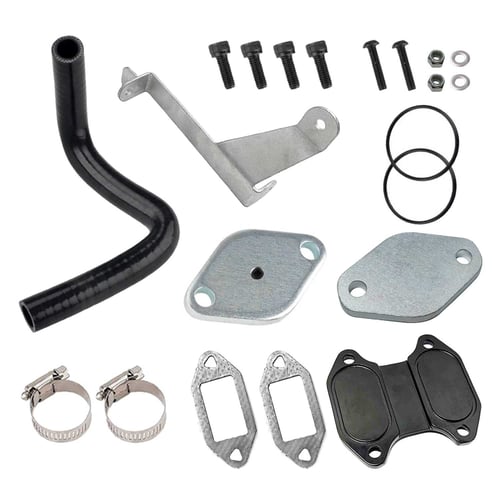
What is a Cummins EGR Delete Kit?
A Cummins EGR Delete Kit is a performance upgrade designed to remove and replace the factory EGR system. By preventing hot, soot-filled exhaust gases from entering your intake manifold, these kits improve engine reliability, lower operating temperatures, and stop carbon buildup.
What's Included in Our Cummins EGR Delete Kits?
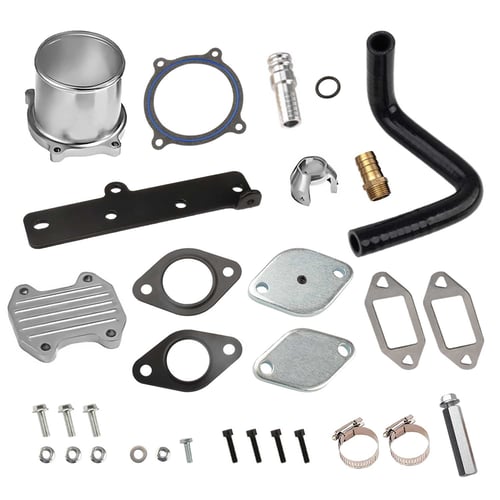
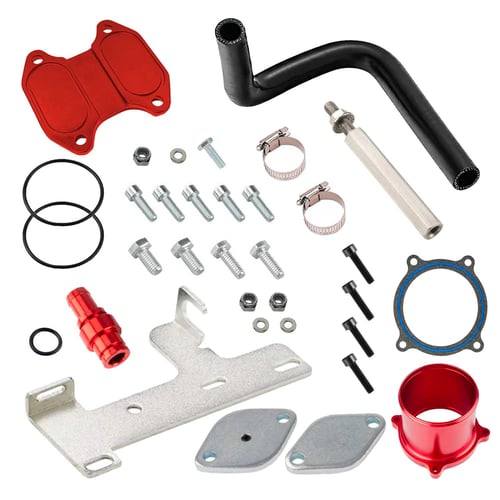
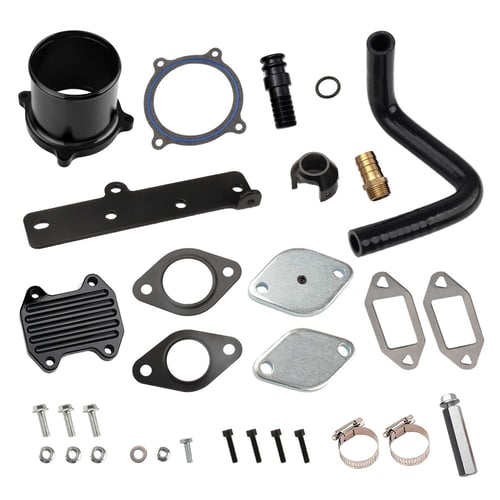
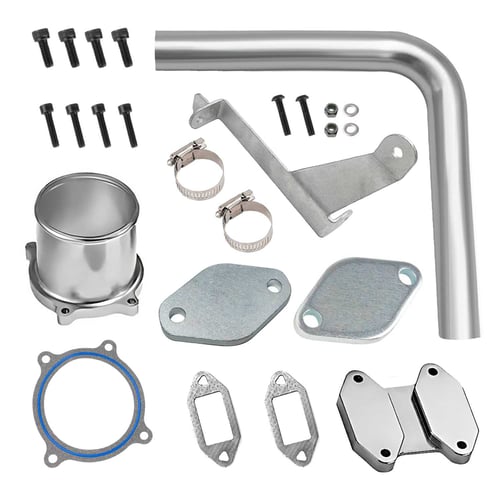
Our collection includes both standard and complete bypass kits. Most kits typically include:
- Precision CNC Block-Off Plates
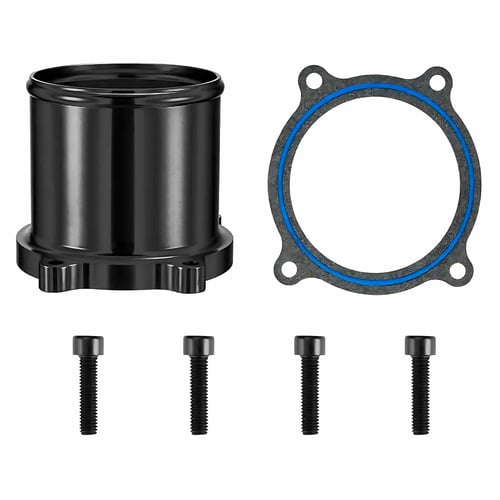
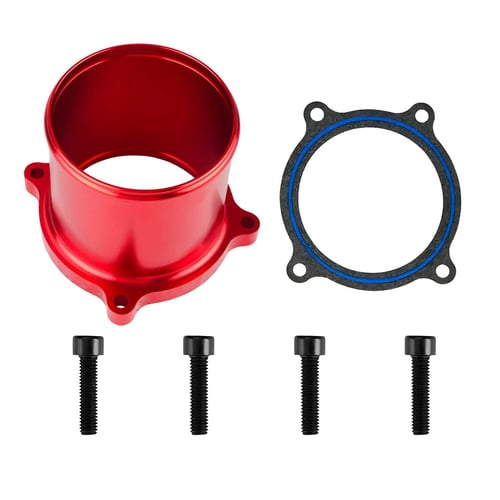
- High-Flow Intake Elbows
- Coolant Bypass Hoses & Reroute Plugs
- Stainless Steel Hardware & High-Temp Gaskets
- Support Brackets
Key Benefits of Installing a Cummins EGR Delete Kit
- Engine Longevity: Stop oily mist from coating your turbo and intercooler pipes.
- Cleaner Intake: Prevent thick sludge buildup in the intake manifold and valves.
- Reliability: Eliminate the risk of crankcase pressure blowing out engine seals.
- Turbo Protection: Keep your turbocharger compressor wheel free from oil residue.
- Lower Maintenance: End frequent CCV filter changes and costly sensor cleanings.
- Better Airflow: Ensure your engine breathes only clean air for better combustion.
Cummins EGR Delete Kit: Deleted vs. Stock
| Dimension |
Stock |
Deleted |
| Horsepower |
Restricted by hot intake air and factory tuning. |
Cleaner combustion and tuning add 40–100+ HP. |
| Fuel Economy |
Efficiency is lost to EGR heat and soot. |
Most owners report a gain of 1–3 MPG. |
| Maintenance Cost |
Frequent EGR valve cleaning and cooler repairs. |
Eliminates the primary source of carbon buildup. |
| Reliability |
Moderate; EGR cooler leaks can cause engine failure. |
Removes the most common failure point on the 6.7L. |
| Exhaust Gas Temp |
Hot exhaust gases significantly heat the intake. |
Drops temperatures by 150–200°F. |
| Legal Status |
Street Legal; EPA & CARB compliant. |
Off-Road / Competition / Racing Use Only. |
Cummins EGR Delete Kit Model Year Fitment Guide
Choosing the correct Cummins EGR Delete Kit by year is essential to ensure seamless fitment, correct sensor positioning, and proper coolant routing. Use the guide below to identify the right performance solution for your Dodge Ram.
| Cummins EGR Delete Kit |
Engine & Model Year |
Compatible Vehicles (Dodge Ram HD) |
Factory Emissions System |
Common Issues With Stock EGR System |
Recommended Delete Setup |
| 5.9L Cummins EGR Delete Kit |
2003–2007 |
Ram 2500 / 3500 (24V Common Rail) |
No EGR (Internal timing used for NOx) |
Excessive intake heat, restrictive factory intake horn, grid heater failure |
Intake Elbow & Grid Heater Delete |
| 6.7L Cummins EGR Delete Kit |
2007.5–2009 |
Ram 2500 / 3500 / 4500 / 5500 |
EGR + DPF (First Gen 6.7L) |
Massive soot buildup, sticking EGR valves, turbo lag, and choking engine feel |
Full Cooler Delete with Billet Block-Off Plates |
| 6.7L Cummins EGR Delete Kit |
2010–2012 |
Ram 2500 / 3500 HD Trucks |
EGR + DPF (Updated platform) |
EGR cooler internal cracking leading to coolant consumption and white smoke |
Standard EGR Delete with Stainless Hardware |
| 6.7L Cummins EGR Delete Kit |
2013–2018 |
Ram 2500 / 3500 (DEF/SCR Gen) |
EGR + DPF + DEF (SCR) |
High EGTs, carbon sandblasting of cylinder walls, complex sensor failures |
Full Delete with Coolant Reroute Hose & Bypass |
| 6.7L Cummins EGR Delete Kit |
2019–2022 |
Ram 2500 / 3500 (Updated 5th Gen) |
Advanced EGR + SCR + High Pressure DPF |
Compact engine bay heat-soak, electronic actuator failures, extreme soot buildup |
Precision CNC Billet Kit with High-Flow Piping |
| 6.7L Cummins EGR Delete Kit |
2023–2026 |
Ram 2500 / 3500 (Latest Gen) |
Most Advanced Emissions + Locked ECM |
Highly complex plumbing, extremely tight clearance, warranty-ending sensor trips |
Vetted, Direct-Fit Competition Kits with ECU Tuning Support |
How to Install a Cummins EGR Delete Kit
Installing a Cummins EGR Delete Kit involves removing the heavy, soot-clogged factory EGR cooler and valve assembly and replacing them with precision-machined block-off plates and high-flow bypass components.
Installation Steps
- Vehicle Preparation: Ensure the truck is parked on a level surface and the engine is completely cool to the touch. Disconnect both batteries to prevent electrical shorts. Because the Cummins EGR cooler is a "wet" system, the engine coolant must be partially drained to prevent spills during the removal of the cooler assembly.
- Remove Factory EGR Components: Disconnect the electrical connectors from the EGR valve and bypass actuator. Carefully unbolt the EGR cooler from the exhaust manifold and intake side. Remove the crossover tube and all associated mounting brackets. Use a shop vacuum or clean rags to ensure no debris enters the intake or exhaust ports during this process.
- Install Delete Components: Thoroughly clean the mounting surfaces on the exhaust and intake manifolds. Install the high-grade billet aluminum block-off plates using the provided high-temperature gaskets and stainless steel hardware. If your kit includes a coolant reroute hose, install it now to maintain proper coolant circulation across the back of the cylinder head.
- Reassemble & Refill Cooling System: Reinstall any intake piping or sensors that were moved for access. Refill the cooling system with fresh, manufacturer-approved OAT or HOAT coolant. It is vital to properly bleed the air from the cooling system using the bleeder screw located near the thermostat housing to prevent localized hot spots.
- Final Check & Software Calibration: Perform a visual inspection of all bolts, hose clamps, and electrical connections. Reconnect the batteries. Before starting the engine, you must use a "delete-capable" tuner to flash the ECU. This prevents the truck from entering Limp Mode or triggering Check Engine Lights. Once flashed, start the engine and inspect all sealing surfaces for exhaust or coolant leaks as the engine reaches operating temperature.
Note: Every EngineGo kit includes a comprehensive, model-specific guide to ensure your installation is seamless and your fitment is guaranteed. For technical deep-dives, step-by-step photos, and specific torque specs, you can find detailed information under the "Installation Guide" tab on every product page.
Why Choose EngineGo for Cummins EGR Delete Kit
Choosing EngineGo means partnering with diesel performance experts. We back every build with technical support, ensuring your truck moves from the shop to the street with peak power and reliability.
15+ Years of Expert Support
In-House Specialists: Our team has over 15 years of hands-on experience in Ford Powerstroke, Cummins, and Duramax platforms.
Expert Guidance: We provide comprehensive support, from initial fitment questions to final tuning advice.
High-Performance Reliability
Built to Last: We pride ourselves on offering parts designed for maximum durability and long-term reliability.
Expertly Vetted: Every product is backed by our deep understanding of diesel engines.
A Seamless Shopping Experience
Free Shipping: Many of our kits include free shipping to get your project started without extra costs.
Money-Back Guarantee: Shop with confidence knowing your purchase is protected if you aren't satisfied.
Off-Road Use Disclaimer
Diesel delete kits are intended for off-road and competition-use vehicles only. These products are not legal for use on public roads and are sold strictly for non-emissions-controlled applications.
Always verify and comply with local, state, and federal regulations before purchase or installation.
FAQ
What is a Cummins EGR Delete Kit?
A Cummins EGR Delete Kit is a performance modification that removes the factory Exhaust Gas Recirculation system. It replaces failure-prone components, like the EGR cooler and valve, with high-flow block-off plates and bypass hoses to prevent soot from re-entering your intake manifold.
Do I need a tuner after installing an EGR delete?
Yes. This is mandatory. Without delete-capable ECU tuning, your Cummins will immediately trigger a Check Engine Light and enter limp mode, which severely restricts engine power and speed.
Will an EGR delete improve my fuel economy?
Most Cummins owners report an increase of 1–3 MPG. This improvement occurs because the engine no longer has to process "dirty" air, and the turbocharger can operate more efficiently with reduced backpressure.
What is the difference between a Full Delete and Block-Off Plates?
A block-off kit only stops the flow of exhaust but leaves the heavy cooler in place. A full delete kit removes the entire cooler assembly, clearing clutter from your engine bay and permanently eliminating the risk of internal coolant leaks.