EngineGo Blog Center

Welcome to the EngineGo Blog Center — your go-to source for everything related to diesel truck exhaust systems. Whether you're driving a Powerstroke, Duramax, Cummins, EcoDiesel, or another powerhouse, our blog delivers in-depth insights into factory exhaust setups, common modification methods, product breakdowns, and expert guidance on choosing the right upgrade for your build.

From understanding stock components to exploring performance-enhancing mods, we help you make informed decisions tailored to your truck's needs. Before performing any modifications, always consult and comply with your local laws and regulations.

Popular Categories

Popular Posts
October 08, 2026

L5P Duramax Delete Tuner: EFILive vs HP Tuners Compared

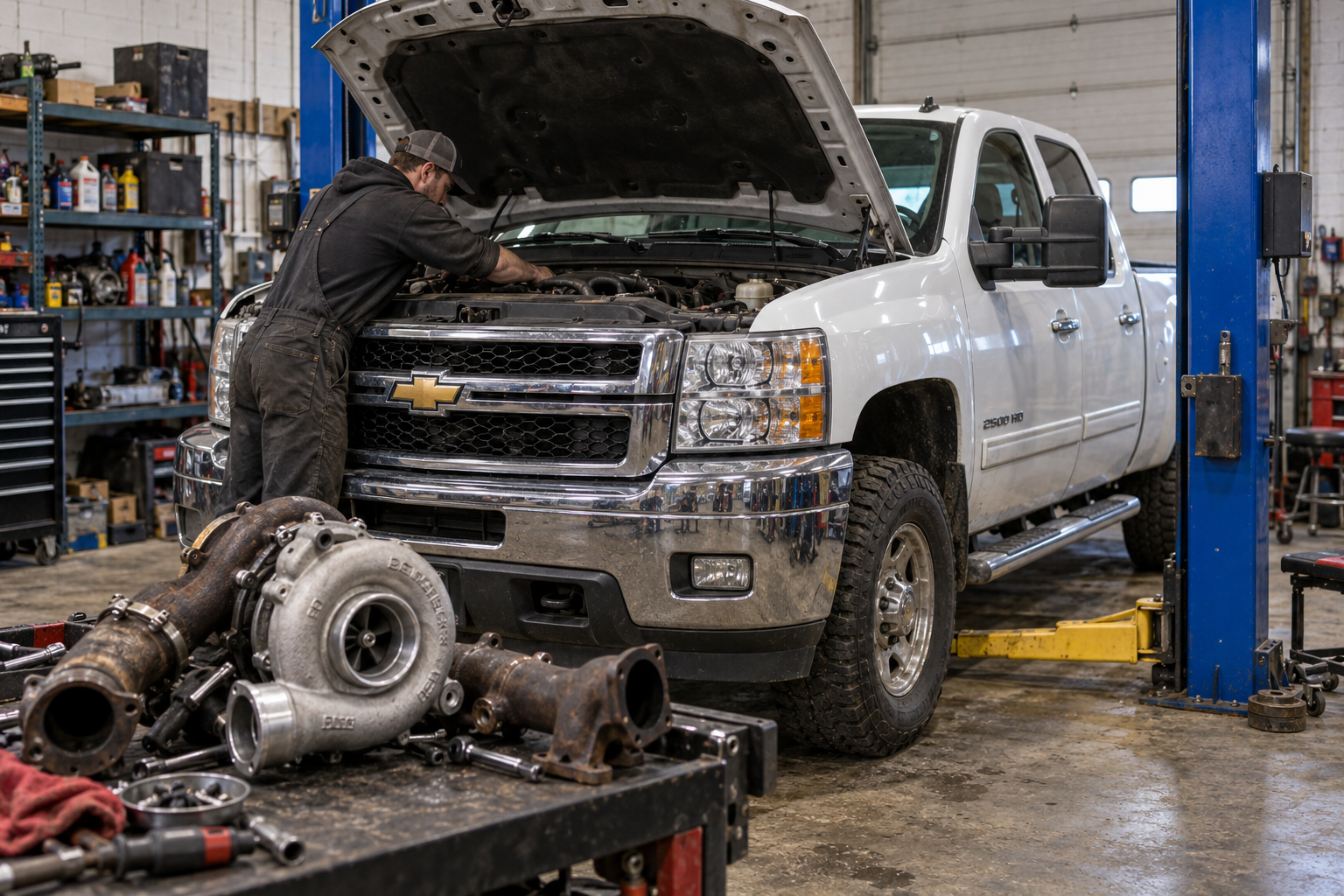
If you own a 2017 to 2023 Silverado or Sierra 2500HD/3500HD with the 6.6L L5P Duramax and you are shopping for a delete tuner, you have probably landed on two names: EFILive and HP Tuners. Both are proven. Neither one works on an L5P straight out of the box, and neither one is a delete tune by itself. This guide compares EFILive vs HP Tuners on the L5P, adds a third option built on EZ Lynk, and shows what each setup costs before you order. All three paths are intended for off-road, race, or non-public-road use where permitted.

September 29, 2026

Chevy Silverado & GMC Sierra Diesel Delete: What You Need to Know
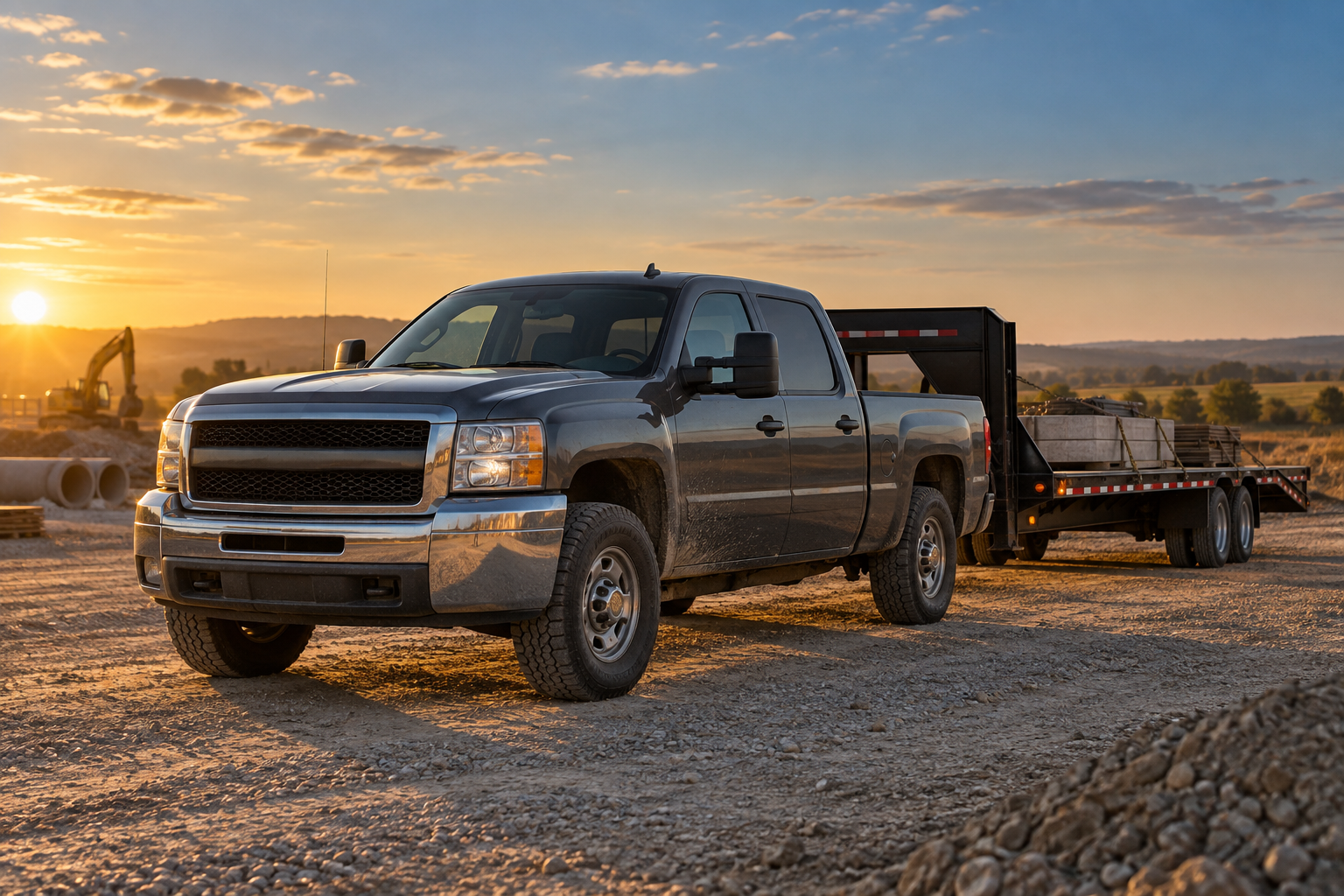
If you own a Silverado or Sierra 2500HD or 3500HD with the 6.6L Duramax, the words "diesel delete" probably came up after a fault code, a clogged DPF, or a repair quote that made you wince. Before you order anything, you need to know which Duramax is under your hood. Each generation has a different emissions setup, and each one needs a different parts list. This guide covers the Silverado and Sierra Duramax delete basics for the LBZ, LMM, LML, and L5P: what each generation needs, what it costs, how tuning works, and what to check about towing and warranty. Once you know your engine, you can match it to the right Duramax delete kit by year and truck configuration. Important: Under the federal Clean Air Act, a truck certified for road use stays a regulated motor vehicle, even when you use it off-road or at the track. Removing emissions equipment can bring federal civil penalties and state enforcement, and a tuned truck can fail state inspection. These parts are sold for off-road, race, or non-public-road applications where permitted, so confirm the rules that apply to your truck before you buy or install anything.

September 28, 2026

LMM Duramax Common Problems: EGR, DPF & Turbo Issues
If you own a 2007.5 to 2010 Chevy Silverado or GMC Sierra 2500HD/3500HD with the 6.6L LMM Duramax, you already know the truck is strong. It also has a short list of repeat trouble spots. Most of them trace back to the emissions hardware added in 2007.5 and the age of the parts now. This guide covers the five problems LMM owners search for most, what causes each one, and what your real options are. Match every part to your exact year, cab, and bed configuration before you order.

September 23, 2026

Catch Can vs CCV Reroute: Which One Does Your Diesel Need?

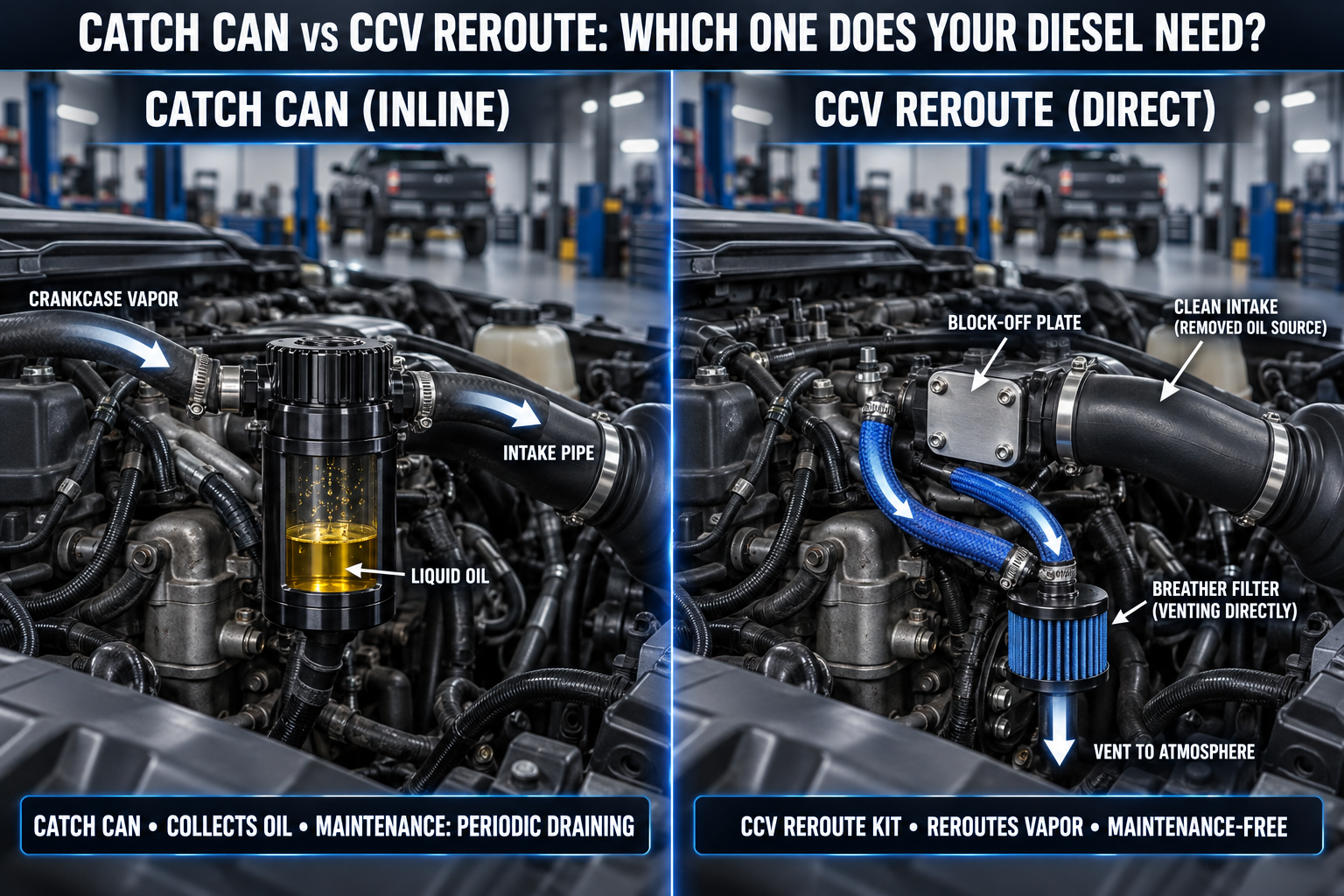
Every diesel engine builds crankcase pressure as combustion gases blow past the pistons and mix with engine oil. That vapor has to go somewhere, and on most Powerstroke, Cummins, and Duramax trucks it routes straight back into the intake through the factory PCV or CCV system, coating your intake piping and intercooler with an oil film over time. Two aftermarket fixes come up in almost every diesel forum thread on this topic: the oil catch can and the CCV reroute kit. Both deal with crankcase vapor, but they take different approaches. Picking the wrong one for your use case means either extra maintenance you did not plan for, or a fix that does not go far enough.

September 22, 2026

Duramax CCV Reroute by Engine: LLY, LBZ and LMM

If you own a 2004.5 to 2010 Duramax and you've pulled the intercooler piping off during a mod or a repair, you already know the problem. Oil. It pools in the charge pipes, coats the intercooler fins, and eventually finds its way into the intake tract. That's the factory closed crankcase ventilation system doing exactly what General Motors designed it to do, just not in a way that keeps your engine bay clean or your intercooler working at full capacity over the long haul. A CCV reroute kit solves this by redirecting crankcase vapor away from the intake and venting it externally, usually through a separator or catch can that keeps oil out of the airstream. The hardware isn't one size fits all though. LLY, LBZ, and LMM engines use different fitting locations and hose routing, so picking the right Duramax CCV reroute kit for your exact generation matters more than most owners expect.

September 20, 2026

6.7 Powerstroke CCV Reroute: Symptoms, Parts, and Install Guide

If oil keeps showing up somewhere it shouldn't on your 6.7 Powerstroke, the crankcase ventilation system is usually the first place to look. The factory CCV filter has one job: separate oil vapor from blow-by gas before that gas gets recycled back into the intake. On a truck that idles a lot, tows often, or just has real miles on it, that filter loads up faster than most owners expect, and once it does, the whole system starts working against the engine instead of for it. What starts as a small oil film in a charge pipe can turn into a seal leak or a fouled sensor down the road if the root cause never gets addressed. This guide covers why owners move to a 6.7 Powerstroke CCV reroute kit, the symptoms that point to a CCV problem, what a reroute kit actually replaces, and how the install fits into a shop day.

Please enter the following details before adding to cart.
Lucky Spin
Wheel
Spin

{{ emailError }}

By spinning the wheel, you agree to our Terms & Conditions and Privacy Policy, and opt-in to receive promotional emails and updates from EngineGo.

Maybe later