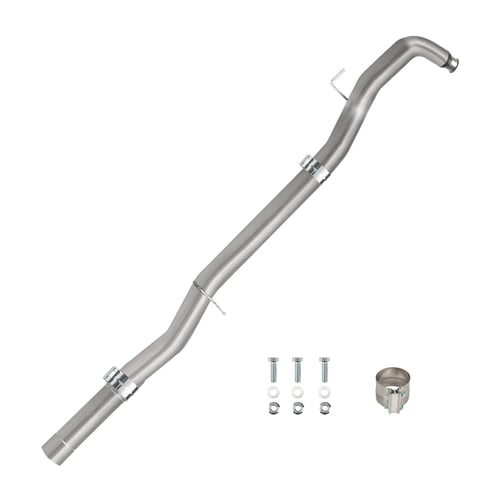
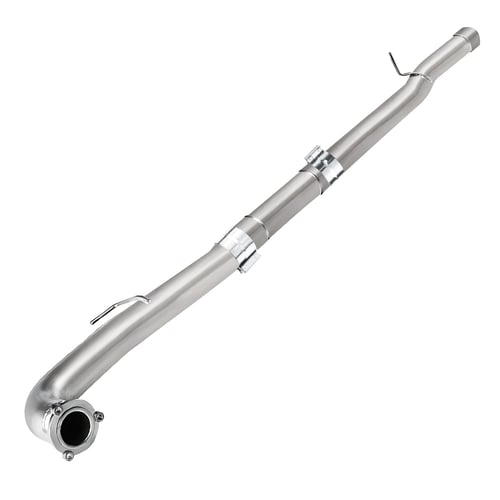
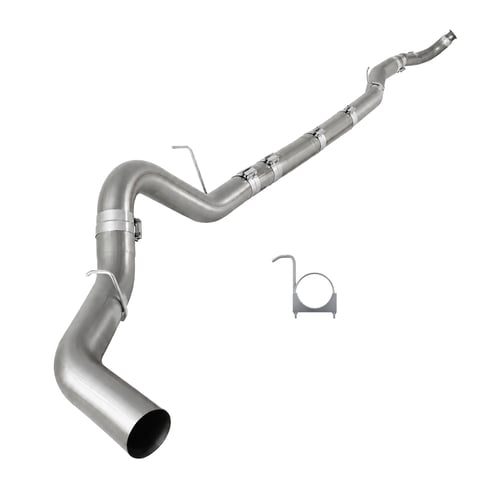
What's a LML Duramax Delete Pipe?
An LML Duramax delete pipe (for 2011–2016 GM trucks) is a straight-through exhaust component designed to physically remove and replace the factory Diesel Particulate Filter (DPF) and Selective Catalytic Reduction (SCR) system.
Key Benefits of Installing a LML Duramax Delete Pipe
- Reliability: Eliminate limp mode and service DEF errors for total peace of mind.
- Fuel Efficiency: End fuel-heavy regen cycles to maximize every tank of diesel.
- Engine Longevity: Stop fuel dilution in your oil by disabling the regeneration process.
- Better Cooling: Lower EGTs by removing the restrictive DPF and SCR bottlenecks.
- Lower Maintenance: Say goodbye to DEF refills and expensive sensor replacements.
- Performance: Experience faster turbo spooling and much sharper throttle response.
LML Duramax Delete Pipe: Deleted vs. Stock
| Dimension |
Stock (Factory) |
Deleted (Upgraded) |
| Horsepower |
Limited by factory tuning (~397 HP); prone to power loss during heat-heavy regen cycles. |
Increased; Safe gains of 50–150+ HP are common; specialized tunes can reach 540+ rwhp. |
| Fuel Economy |
Average; Significant fuel is wasted every 300–700 miles to cook the DPF filter. |
Improved; Eliminating regens and backpressure typically gains 2–4 MPG . |
| Maintenance Cost |
High; Requires regular DEF refills and frequent replacement of sensitive NOx and EGT sensors. |
Minimal; Permanently removes the need for DEF and the maintenance of complex sensors. |
| Reliability |
Moderate; DEF pump failures and clogged filters are the primary causes of roadside limp mode. |
Significantly Enhanced; Removes the #1 failure point; keeps engine oil cleaner by stopping fuel dilution. |
| Exhaust Gas Temp |
High; The restrictive DPF traps intense heat; EGTs spike dangerously during active regeneration. |
Lower EGTs; High-flow pipes drop operating temperatures by 150–230°F, protecting the turbo. |
| Legal Status |
Street Legal; EPA compliant. |
Off-Road / Competition Use Only. |
| Backpressure |
High; The dense ceramic honeycomb of the DPF creates significant exhaust restriction. |
Minimal; A straight-pipe design allows for almost zero resistance, improving turbo health. |
| Sound |
Silent; The DPF/SCR assembly acts as a massive primary muffler, masking all engine sound. |
Aggressive; Unlocks the signature LML Hiss and a deep, powerful V8 diesel rumble. |
LML Duramax Delete Pipe Models Year Fitment Guide
Choose the perfect LML Duramax Delete Pipe by year to guarantee seamless fitment and performance. We offer delete pipes tailored to the exhaust configurations of the 3.0L EcoDiesel platform.
| Duramax Delete Pipe |
Model Year |
Emissions Systems Equipped |
Common Issues |
Recommended Delete Pipe Setup |
| LML Duramax Delete Pipe |
2011–2012 |
EGR, DPF, DEF (SCR) |
DEF faults, frequent regen cycles, sensor failures |
DPF + SCR Delete Pipe with supported tuning |
| 2013–2014 |
EGR, DPF, DEF (Updated sensors) |
Regen downtime, DEF warning lights |
Year-Specific Delete Pipe with compatible tuning |
| 2015–2016 |
EGR, DPF, DEF (Updated ECM strategy) |
Stricter ECM controls, limited tuning options |
Vetted Delete Pipes for Supported Applications Only |
Below is a guide to our specialized LML Duramax Delete Pipe solutions. You can select the corresponding product below to view full specifications and compatibility details:
| Feature |
4" Duramax LML DPF & CAT Delete Pipe (2011–2016)
|
4" Duramax LML DPF Delete Race Pipe (2015.5–2016)
|
| Fitment Years |
2011–2016 (Full LML Range) |
2015.5–2016 (Late LML Only) |
| Pipe Diameter |
4 Inch |
4 Inch |
| System Type |
Sectional Pipe (Multi-piece) |
Sectional Race Pipe (Streamlined) |
| Coverage |
Replaces DPF and CAT sections |
Replaces DPF section (Race spec) |
| Components Deleted |
DPF & CAT |
DPF (& CAT depending on install) |
| Material |
T409 Stainless Steel |
T409 Stainless Steel |
| Sound Level |
Aggressive |
Aggressive / Race Tone |
| Complexity |
Simple (Bolt-on) |
Simple (Targeted Fitment) |
Note: A compatible tuner is strictly required after installing any of these products. The tuner is essential to disable the DEF/DPF sensors and prevent the truck from entering Limp Mode.
How to Install a LML Duramax Delete Pipe
Installing an LML Duramax delete pipe (2011–2016) replaces the factory emissions exhaust components with a high-flow pipe to reduce exhaust restriction, lower exhaust gas temperatures (EGTs), and improve overall drivability.
Installation Steps
- ECM Preparation & Tuning: The process begins with ECM calibration using a supported tuning platform. This step disables emissions-related diagnostics and prevents warning lights or limp mode once factory components are removed.
- Factory Emissions Exhaust Removal: The factory exhaust section containing the DPF and SCR (DEF) components is unbolted and removed. Sensors such as EGT and NOx sensors are disconnected or electronically disabled according to the tuning configuration.
- Delete Pipe Installation: The LML delete pipe is installed in place of the factory emissions exhaust. These pipes are designed to align with factory hangers and provide proper clearance around the frame, transmission crossmember, and driveline.
- Sensor & Connection Verification: Any required sensor fittings or plugs are installed, and all clamps and connections are aligned and tightened to ensure a secure, leak-free exhaust system.
- System Check & Final Verification: After installation, the engine is started and inspected for exhaust leaks. The tuner is used to clear any remaining diagnostic codes and verify proper operation during a short test drive.
Note: Every EngineGo kit includes a comprehensive, model-specific guide to ensure your installation is seamless and your fitment is guaranteed. For technical deep-dives, step-by-step photos, and specific torque specs, you can find detailed information under the Installation Guide tab on every product page.
Why Choose EngineGo for LML Duramax Delete Pipe
Choosing EngineGo means partnering with diesel performance experts. We back every build with technical support, ensuring your truck moves from the shop to the street with peak power and reliability.
15+ Years of Expert Support
In-House Specialists: Our team has over 15 years of hands-on experience in Ford Powerstroke, Cummins, and Duramax platforms..
Expert Guidance: We provide comprehensive support, from initial fitment questions to final tuning advice.
High-Performance Reliability
Built to Last: We pride ourselves on offering parts designed for maximum durability and long-term reliability.
Expertly Vetted: Every product is backed by our deep understanding of diesel engines.
A Seamless Shopping Experience
Free Shipping: Many of our kits include free shipping to get your project started without extra costs.
Money-Back Guarantee: Shop with confidence knowing your purchase is protected if you aren't satisfied.
Off-Road Use Disclaimer
Diesel delete kits are intended for off-road and competition-use vehicles only. These products are not legal for use on public roads and are sold strictly for non-emissions-controlled applications.
Always verify and comply with local, state, and federal regulations before purchase or installation.
FAQ
What is the difference between a DPF delete and a DEF delete?
On the LML, they are essentially the same project. The factory exhaust has one massive canister that houses both the Diesel Particulate Filter (DPF) and the SCR catalyst. An LML delete pipe replaces this entire unit. Once the pipe is installed and the truck is tuned, the DEF system is electronically disabled, so you no longer need to refill the DEF tank.
Do I need a tuner to install an LML delete pipe?
Absolutely. You cannot run an LML with a delete pipe without specialized tuning. The truck's ECM monitors a dozen different sensors in the exhaust.
Is an EGR delete required at the same time?
It is not physically required for the exhaust pipe to work, but it is highly recommended. While the delete pipe handles the exhaust side, an EGR delete prevents hot, dirty soot from being recirculated back into your engine's intake. Most LML owners do both at once for a complete weight-loss transformation.
How much of an MPG gain should I expect?
Most LML owners see an improvement of 2 to 4 MPG. This gain comes from two places: eliminating the fuel-heavy regen cycles and reducing the massive backpressure caused by the factory filters, which allows the engine to work much more efficiently.
What happens to all the sensors in the factory pipe?
Most LML delete pipes come with bungs. You can either reinstall your factory EGT sensors so your tuner can monitor heat, or you can use "CAN Bus plugs" to seal the harness and leave the sensors off entirely, depending on your specific tune requirements.