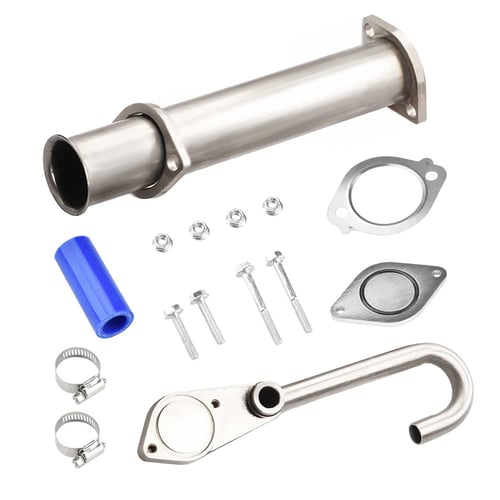
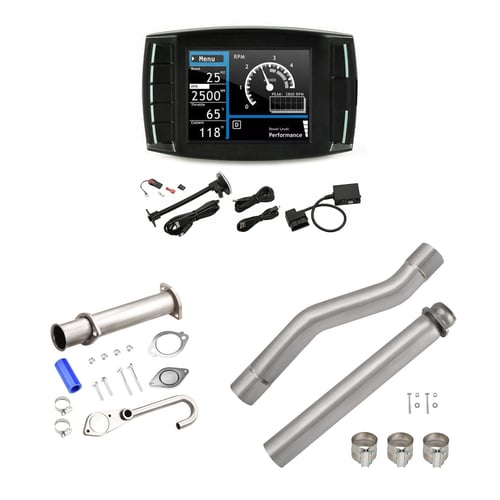
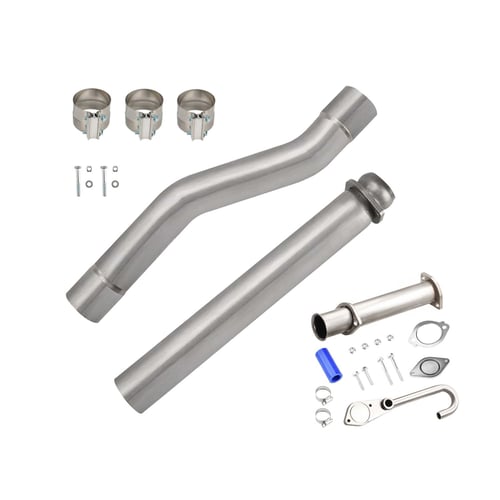
What Is a Powerstroke Up Pipe?
A powerstroke up pipe is an exhaust-side component that routes exhaust gases from the manifold side toward the turbocharger. In many Ford diesel applications, the factory up pipe is exposed to constant heat, pressure, and vibration, which can lead to fatigue over time.
That is why many Powerstroke owners replace the factory part when dealing with:
- Exhaust leaks
- Cracked or worn piping
- Weak or aging expansion joints
- Turbo service or manifold work
- Supporting upgrades during a larger performance build
Why Upgrade Your Powerstroke Up Pipe?
A quality powerstroke up pipe kit can do more than replace a damaged factory part. Depending on the application, it can also help support a more durable and better-matched exhaust-side setup.
Key Benefits of Installing a Powerstroke Up Pipe
- Reduce exhaust leaks: One of the biggest reasons owners replace a factory Powerstroke up pipe is to address or prevent exhaust leaks. Competitor pages repeatedly position these kits as solutions for sealing the exhaust path and reducing leakage around failure-prone stock components.
- Support turbo efficiency: Because the up pipe routes exhaust toward the turbocharger, a stronger and better-sealed setup can help support more consistent turbo operation. Several competitor listings explicitly market Powerstroke up pipes around improved turbo efficiency or turbocharger exhaust routing.
- Improve durability: Many aftermarket products are sold with heavy-duty or stainless construction, often highlighting bellows expansion joints and corrosion resistance for long-term reliability.
- Upgrade during major service: If you are already replacing the turbo, removing manifolds, or refreshing nearby exhaust-side components, it makes sense to inspect and upgrade the powerstroke up pipe at the same time.
- Build a stronger foundation for future mods: For many enthusiasts, an upgraded Powerstroke up pipe is part of a broader reliability or performance plan that includes related exhaust, airflow, or turbo components.
Compatible With Popular Powerstroke Modification Components
In real-world Powerstroke builds, powerstroke up pipe is often installed alongside other exhaust, turbo, and airflow upgrades.
Commonly paired components include:
Downpipes
A Powerstroke up pipe is often installed as part of a more complete exhaust-side refresh. If you are upgrading exhaust routing, it makes sense to review downpipe compatibility at the same time. Competitor Ford Powerstroke collections heavily feature downpipes alongside other exhaust hardware.
Exhaust manifolds
Up pipes and manifolds work closely together, so compatibility matters. This is especially important on 6.4L applications, where competitor listings specifically warn that some up-pipes will not work with certain factory 6.0L manifold configurations.
All-in-one kits
Some Powerstroke collections bundle multiple supporting parts together, and competitor sites explicitly list all-in-one kits that sit near Powerstroke exhaust and tuning categories.
Tuning devices and related electronics
Powerstroke performance ecosystems often include tuning tools and supporting electronics alongside hard parts categories. Competitor Ford Powerstroke collections prominently merchandise tuning products this way.
Choose the Right Powerstroke Up Pipe for Your Build
Not every truck owner shops for a Powerstroke up pipe for the same reason. This collection supports several common buyer needs.
For stock replacement
If your factory part is leaking, cracked, or worn out, a direct-fit Powerstroke up pipe kit can restore reliability and help seal the exhaust-side path.
For towing and heavy-duty use
If your truck works hard under load, stronger materials and better heat resistance can make a real difference in long-term durability.
For turbo and exhaust upgrades
If you are upgrading your turbocharger, manifolds, or surrounding exhaust-side components, replacing the powerstroke up pipe at the same time helps create a cleaner, better-matched build.
How to Install a Powerstroke Performance Pipe
Installing an upgraded Powerstroke performance pipe involves replacing the restrictive, thin-walled factory tubing with larger-diameter, mandrel-bent components.
Installation Steps
- Vehicle Preparation: The truck is parked on a level surface and the engine is allowed to cool completely, as exhaust components reach extreme temperatures. Both batteries are disconnected for safety. For downpipe installations, the front passenger-side wheel and inner fender liner are often removed to provide the necessary clearance to access the turbocharger outlet.
- Remove Factory Piping: The factory clamps and mounting bolts are loosened and removed. On many Powerstroke models, the V-band clamp at the turbocharger discharge is a primary connection point. Because these components are exposed to the elements, penetrating oil is frequently used to prevent hardware breakage. The restrictive factory pipe is then maneuvered out of the chassis, sometimes requiring the temporary relocation of transmission dipstick tubes or heat shields.
- Prepare Mounting Surfaces: The turbocharger flange and any remaining exhaust connections are cleaned of soot, rust, or old gasket material. Ensuring a clean, smooth surface is vital for a leak-free seal, especially for high-pressure intercooler pipes or turbo-back exhaust components where a minor leak can lead to a significant loss in boost or performance.
- Install Performance Pipe: The new high-flow pipe is positioned into place. Mandrel-bent pipes are designed to follow factory routing while offering a larger internal diameter. New heavy-duty clamps, gaskets, and hardware are installed. Bolts are initially hand-tightened to ensure proper alignment with the rest of the exhaust or intake system before being torqued to factory specifications to prevent rattling or shifting under vibration.
- Final Inspection & Leak Test: Fender liners, wheels, and intake components are reinstalled, and the batteries are reconnected. The engine is started and allowed to reach operating temperature. A thorough visual and audible inspection is performed to ensure there are no exhaust leaks or "boost leaks" at the connection points. Clearance is checked to ensure the new, larger pipe does not make contact with the frame, transmission, or electrical harnesses during engine torque movement.
Note: Every EngineGo kit includes a comprehensive, model-specific guide to ensure your installation is seamless and your fitment is guaranteed. For technical deep-dives, step-by-step photos, and specific torque specs, you can find detailed information under the "Installation Guide" tab on every product page.
Why Choose EngineGo for Powerstroke Up Pipe
Choosing EngineGo means partnering with diesel performance experts. We back every build with technical support, ensuring your truck moves from the shop to the street with peak power and reliability.
15+ Years of Expert Support
In-House Specialists: Our team has over 15 years of hands-on experience in Ford Powerstroke, Cummins, and Duramax platforms..
Expert Guidance: We provide comprehensive support, from initial fitment questions to final tuning advice.
High-Performance Reliability
Built to Last: We pride ourselves on offering parts designed for maximum durability and long-term reliability.
Expertly Vetted: Every product is backed by our deep understanding of diesel engines.
A Seamless Shopping Experience
Free Shipping: Many of our kits include free shipping to get your project started without extra costs.
Money-Back Guarantee: Shop with confidence knowing your purchase is protected if you aren't satisfied.
FAQ
What does a Powerstroke up pipe do?
A Powerstroke up pipe routes exhaust gases from the manifold side toward the turbocharger. It is a key exhaust-side component in many Ford diesel applications.
When should I replace my Powerstroke up pipe?
You may need to replace it if the factory part is leaking, cracked, worn out, or no longer matches the rest of your upgraded setup.
Is a Powerstroke up pipe compatible with turbo upgrades?
Often yes, but compatibility should always be checked against your specific turbo configuration and supporting hardware.