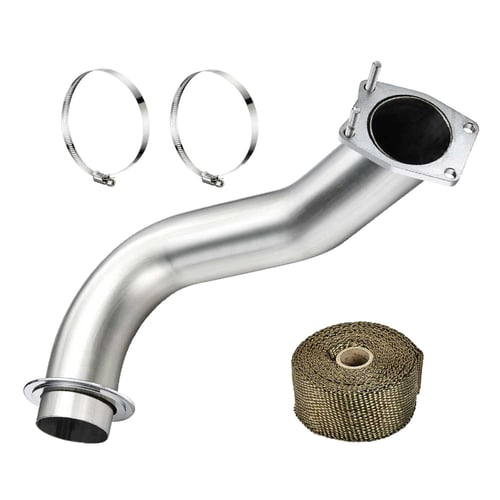
What Is a Duramax Downpipe?
A Duramax downpipe is the section of pipe that routes exhaust gases from the turbocharger outlet into the rest of the exhaust system. On many factory-equipped GM diesel trucks, this area is restrictive due to tight bends, crushed sections, or compact OEM packaging. Upgrading to a larger, mandrel-bent stainless steel downpipe helps improve flow, reduce turbulence, and support more efficient exhaust evacuation from the engine.
Key Benefits of Installing a Duramax Downpipe
Installing an upgraded Duramax downpipe can provide measurable benefits across performance, efficiency, and long-term reliability.
- Faster turbo spooling
- Crisper throttle response
- Reduced backpressure
- Lower exhaust gas temperatures
- Improved exhaust flow
- Better horsepower and torque delivery
- Greater efficiency under load
Why Upgrade the Factory Duramax Downpipe?
The factory downpipe is designed to meet packaging, emission, and cost requirements, but it is not optimized for maximum performance. Many Duramax diesel owners replace the original part because the stock design can create a bottleneck that slows exhaust flow and holds heat near the turbocharger and firewall.
An upgraded aftermarket downpipe can help:
- Provide smoother exhaust gas flow
- Reduce heat buildup around sensitive components
- Support improved tune and tuner performance
- Increase efficiency on highway and towing setups
- Complement EGR, DPF, CCV, and full exhaust system upgrades
- Improve engine response without sacrificing drivability
Ultimate Duramax Downpipe Fitment & Performance Guide
Choose the right Duramax downpipe based on your engine generation, vehicle, turbo setup, and performance goals.
| Engine Generation |
Model Years |
Compatible Vehicles |
Turbo Type |
Available Sizes |
Key Benefits & Performance Notes |
| LB7 |
2001–2004 |
Chevy Silverado / GMC Sierra 2500HD & 3500HD |
Fixed Geometry |
3" |
Eliminates the factory turbo bottleneck and improves exhaust flow with stock or aftermarket turbo housings |
| LLY |
2004.5–2005 |
Chevy Silverado / GMC Sierra 2500HD & 3500HD |
VGT |
3", 3.5" |
Replaces the restrictive pancake pipe, supports quicker spool, and works well with EGR-related upgrades |
| LBZ |
2006–2007 |
Chevy Silverado / GMC Sierra 2500HD & 3500HD |
VGT |
3", 3.5", 4" |
Tuner-ready design that supports stage 2 builds, improved horsepower, and better throttle response |
| LMM |
2007.5–2010 |
Chevy Silverado / GMC Sierra 2500HD & 3500HD |
VGT |
3.5", 4" |
Ideal for exhaust overhauls and off-road use builds; helps improve flow on DPF-related setups |
| LML |
2011–2016 |
Chevy Silverado / GMC Sierra 2500HD & 3500HD |
VGT |
3.5", 4", 5" |
Enhances thermal management, often reducing EGTs by 50-150 °F, while helping protect wiring and engine bay components |
| L5P |
2017–Present |
Chevy Silverado / GMC Sierra 2500HD & 3500HD |
BorgWarner VGT |
3.5", 4", 5" |
Designed for high-output builds with specialized flanges, sensor bungs, and support for 500+ HP combinations |
Duramax Downpipe Buying Guide
Selecting the right Duramax downpipe size depends on your truck’s setup, tune, and intended use.
| Feature |
3" Downpipe |
3.5" Downpipe |
4"– 5" Downpipe |
| Best For |
Stock or Lightly Modified Trucks |
Balanced Daily Driver & Towing Performance |
High-Horsepower & Competition Builds |
| Estimated HP Gains |
10–15 HP |
20–25 HP |
25–40+ HP |
| Compatibility |
All Duramax Models (LB7–L5P) |
All Duramax Models (LB7–L5P) |
Primarily LML / L5P+ Generations |
| Ideal Pairings |
Basic Plug-and-Play Tuners |
EGR Deletes & High-Flow Intake Horns |
Full 5" Exhaust Kits & Upgraded Turbos |
| Primary Benefit |
Improved Throttle Response |
Optimized EGT Reduction |
Maximum Exhaust Velocity & Flow |
Which Duramax Models Use a Downpipe Upgrade Best?
A Duramax downpipe upgrade can benefit nearly every generation of the 6.6L Duramax, but each model has different goals and constraints.
LB7 Duramax downpipe
Best for owners who want to replace the restrictive cast-iron elbow, improve flow, and support a cleaner exhaust path.
LLY Duramax downpipe
Best for trucks needing to remove the factory flat pipe restriction and improve VGT response.
LBZ Duramax downpipe
Best for builds focused on tuning, increased horsepower, and improved throttle response.
LMM Duramax downpipe
Best for owners looking to support off-road use, exhaust modifications, and freer flow with DPF-related changes.
LML Duramax downpipe
Best for reducing heat, lowering EGTs, and supporting higher airflow demands.
L5P Duramax downpipe
Best for modern high-output trucks with sensor requirements, larger turbos, and big-power goals.
How to Install a Duramax Downpipe
Many customers want a Duramax downpipe that is easy to install and comes with clear installation instructions. While the exact process varies by model, most installations follow a similar path.
Installation Steps
- Prepare the Vehicle: Allow the truck to cool fully and disconnect the batteries. Raise the vehicle safely to gain access to the exhaust area.
- Remove the Factory Part: Loosen the clamp or bolt connections at the turbo outlet and exhaust connection point. Depending on the model, surrounding hoses, shields, or minor components may need to be moved for access.
- Test-Fit the New Downpipe: Position the new pipe and confirm proper alignment with the flange, firewall clearance, and transmission area.
- Install and Secure: Attach the new Duramax downpipe kit using the included hardware, clamps, or bolt connections. Tighten all connection points evenly.
- Check Clearance and Startup: Before starting the engine, verify proper clearance from heat-sensitive parts, hoses, and lines. After startup, inspect for leaks, vibration, or contact issues.
Note: Every EngineGo kit includes a comprehensive, model-specific guide to ensure your installation is seamless and your fitment is guaranteed. For technical deep-dives, step-by-step photos, and specific torque specs, you can find detailed information under the "Installation Guide" tab on every product page.
Why Choose EngineGo for Duramax Downpipe
Choosing EngineGo means partnering with diesel performance experts. We back every build with technical support, ensuring your truck moves from the shop to the street with peak power and reliability.
15+ Years of Expert Support
In-House Specialists: Our team has over 15 years of hands-on experience in Ford Powerstroke, Cummins, and Duramax platforms..
Expert Guidance: We provide comprehensive support, from initial fitment questions to final tuning advice.
High-Performance Reliability
Built to Last: We pride ourselves on offering parts designed for maximum durability and long-term reliability.
Expertly Vetted: Every product is backed by our deep understanding of diesel engines.
A Seamless Shopping Experience
Free Shipping: Many of our kits include free shipping to get your project started without extra costs.
Money-Back Guarantee: Shop with confidence knowing your purchase is protected if you aren't satisfied.
FAQ
Will a 3'' downpipe cause me to lose low-end torque?
Absolutely not. On a turbocharged diesel engine, lower backpressure generally helps the turbo spool faster, which can actually improve low-end torque, throttle response, and overall efficiency.
Do I need to wrap my downpipe in heat tape?
While not always required, many owners choose heat wrap, thermal blankets, or ceramic-coated downpipes to keep radiant heat away from the transmission, firewall, and nearby wiring.
Is this part street-legal?
Many downpipes are intended for off-road use, so you should check your local emissions laws before installation. Modifying exhaust components can affect compliance.
Does the downpipe replace the DPF?
No. The downpipe connects the turbocharger outlet to the rest of the exhaust system. On newer trucks such as LMM, LML, and L5P, the DPF is located further downstream.
Will a downpipe improve MPG and highway performance?
Many owners report gains in highway efficiency, throttle response, and overall drivability, especially when the downpipe is combined with a tuner or full exhaust upgrade.