What is Exhaust Gas Recirculation (EGR)?
Exhaust gas recirculation is a critical vehicle emissions control technology used in modern diesel engine applications. The EGR system is an emissions control that recirculates some exhaust gases back into the engine to reduce nitrogen oxide by diluting the air-fuel mix, lowering combustion temperatures in the combustion chamber, and reducing nitrogen oxide emissions.
How does the EGR system work in diesel engine?
Exhaust gases pass through an EGR cooler to lower temperature before entering the intake via the EGR valve. Under specific load and throttle conditions, the engine control unit (ECU) commands the valve to open, allowing gases back into the engine.
This process of recirculating exhaust gas back into the engine reduces oxygen levels in the combustion chamber, slows the combustion process, and lowers nitrogen oxide formation.
The primary appeal: why do owners want to delete the EGR system?
The EGR system is built for regulatory purposes but often leads to soot and carbon issues, causing wear on engine components. Diesel engine owners often consider EGR delete for potentially cleaner and more reliable diesel engine.
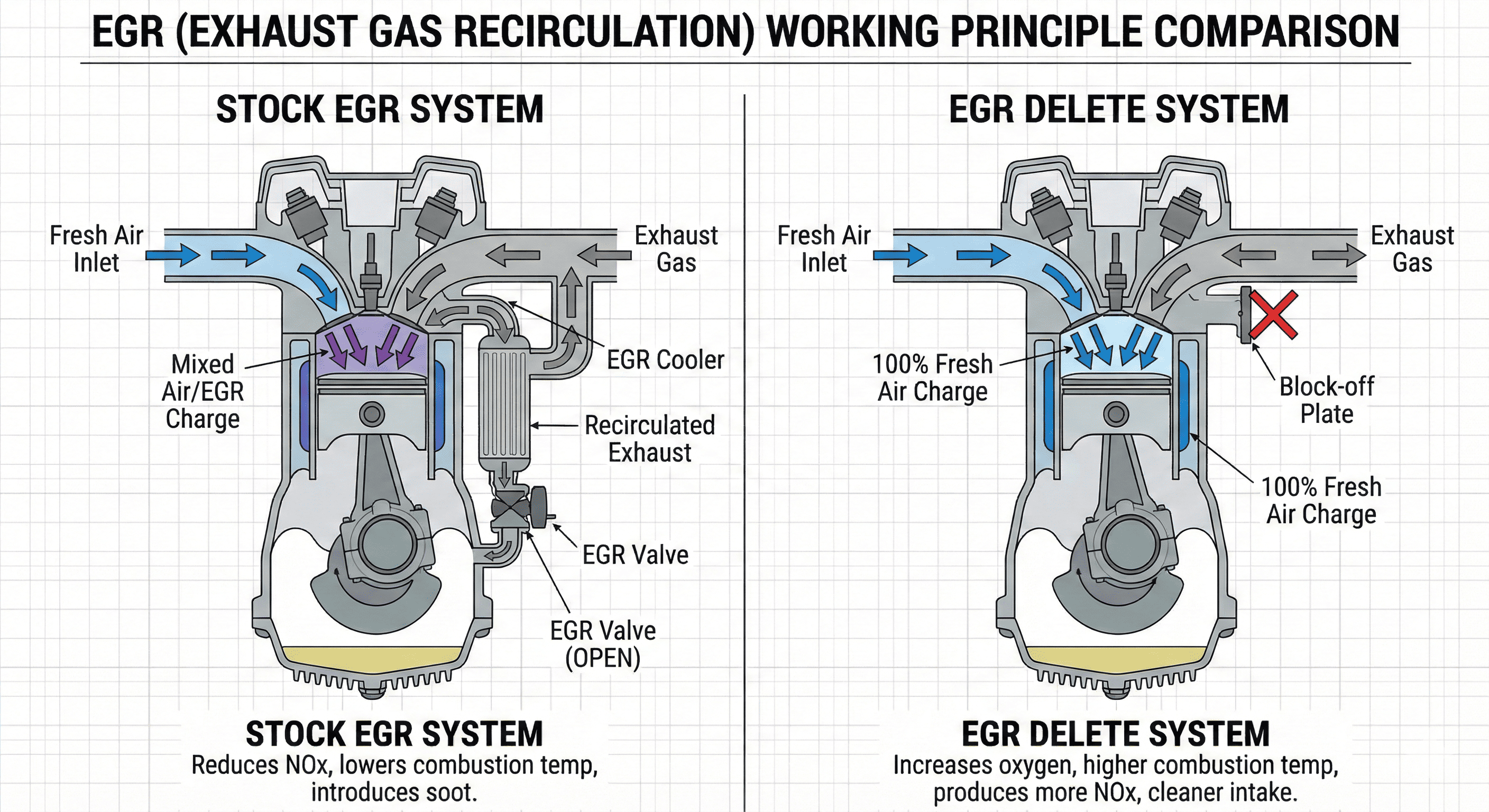
The potential benefits (pros): beyond performance, toward longevity
1.Improved engine reliability
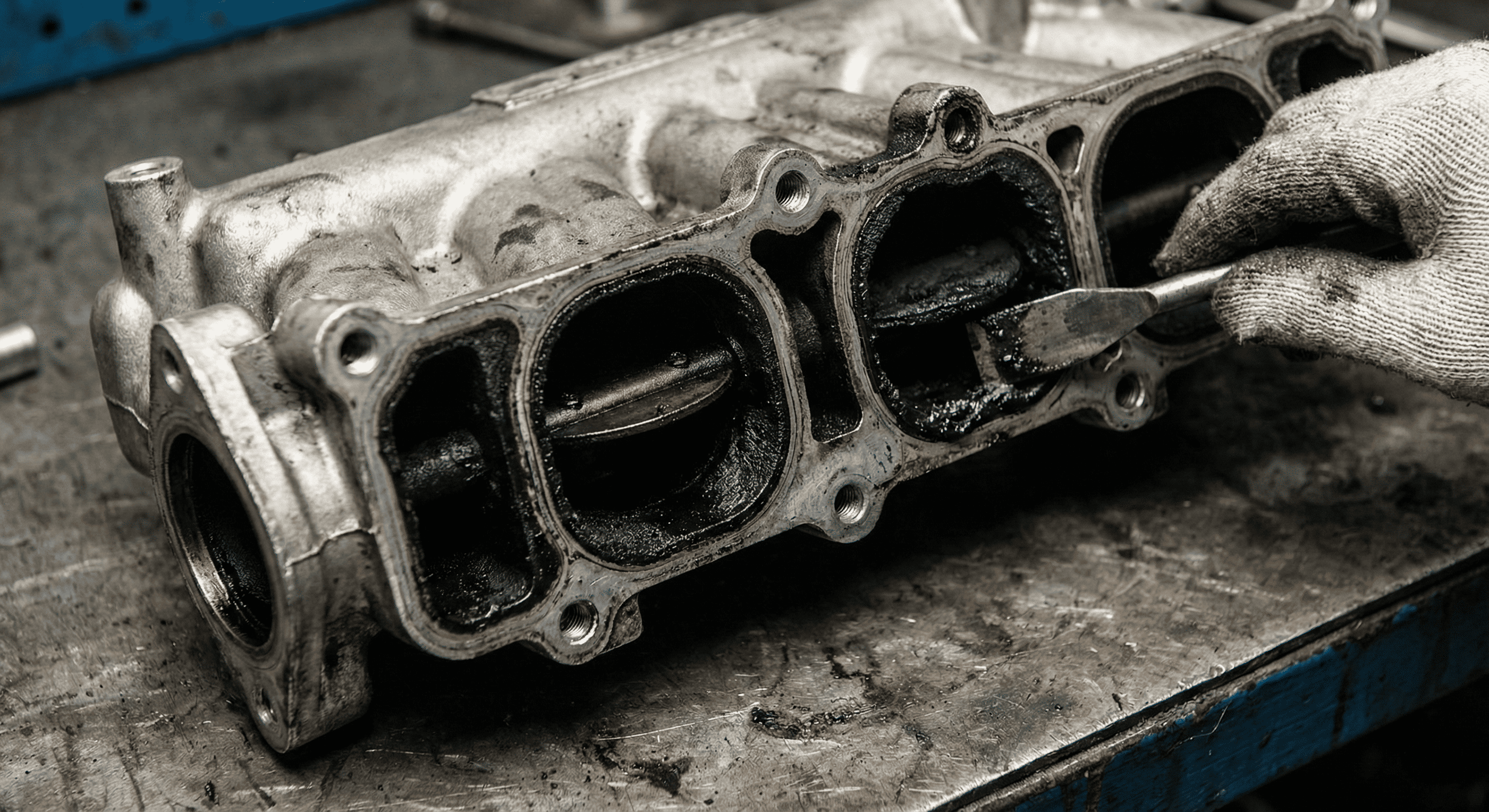
The EGR cooler is one of the weakest links in modern diesel engines. Cracks, pinhole leaks, and gasket failures can allow coolant into the exhaust system and combustion chamber.
An EGR delete removes this failure risk by eliminating the cooler, valve, and associated circulation components. This can prevent hydrolock, coolant contamination, and costly engine rebuilds.
2.Enhanced long-term engine health
The EGR system recirculates soot-laden exhaust gas, carbon accumulates inside:
- Intake manifold
- Valves
- Cylinder walls
- Turbocharger components
Deleting the EGR stops soot from entering the intake system, keeping the combustion chamber cleaner and reducing abrasive wear.
Cleaner airflow can improve overall engine longevity and reduce clog-related maintenance.
3.Improved engine performance and horsepower
With no soot-laden gas diluting the intake charge, airflow becomes cleaner and more consistent.
When paired with proper tuning, this can improve throttle response, increase horsepower, and optimize the combustion process.
4.Potential fuel efficiency improvement
Some drivers report slight gains in fuel economy in automobiles after an EGR delete.
This occurs because the engine operates with maximum oxygen levels, improving thermal efficiency. However, results vary depending on driving conditions and tune quality.
5.Lower exhaust gas temperatures(EGTs)
With optimized ECU tuning, many deleted diesel engines experience lower sustained exhaust gas temperature under load.
Lower temperature stress can benefit the turbocharger, cylinder head, and exhaust system, potentially improving long-term reliability.
The significant risks and drawbacks (cons): A sobering look
1.Illegality and potential fines
tampering with emissions control systems violates the federal clean air act.
An EGR delete is illegal for on-road vehicles and can result in substantial epa fines, failed emissions testing, and registration issues.
2.Increased pollution and nox emissions
Removing the EGR dramatically increases nitrogen oxide emissions, contributing to smog, air pollution, and negative impacts on the atmosphere of earth.
3.Risk of engine damage from improper tuning
The main mechanical risk isn’t hardware removal, but poor ecu tuning.
Aggressive or uncalibrated tunes can cause wrong air-fuel ratios that raise exhaust gas temperatures over 1,400–1,500 °f, risking excessive exhaust gas temperature, engine knocking, piston damage, or turbo failure.
4.Voided warranty and resale limitations
An EGR delete will void manufacturer warranty coverage on emissions and powertrain components.
This can significantly reduce resale value and limit buyer interest.
Technical comparison: Stock EGR system vs EGR delete
| Feature |
Stock EGR System (Active Flow) |
EGR Delete (Clean Air Flow) |
| Primary Air Source |
Fresh filtered air + Hot exhaust gas |
100% Fresh, filtered ambient air |
| Exhaust Gas % |
5% to 40% (depending on load) |
0% |
| Soot & Particulates |
High: Introduces abrasive carbon |
None: Pure air only |
| Oxygen Level |
Diluted/Lower |
Maximum: Optimal for power |
| Intake Temperature |
Higher: Heated by exhaust gases |
Lower: Ambient air only |
| Manifold Condition |
Progressive "Oily-Soot" buildup |
Remains clinically clean |
| Combustion Temp |
Lowered (to reduce $NO_x$) |
Higher (Optimal thermal efficiency) |
The non-negotiable process: delete kit and ecu tuning
What a complete EGR delete kit includes
High-quality EGR delete kits typically include:
- Block-off plates for the intake and exhaust manifolds
- Delete pipes or up-pipes
- Gaskets
- Coolant reroute components
- ECU recalibration support
Proper installation and professional tuning are 100% mandatory to avoid check engine lights and sensor errors.
Why professional-grade ecu tuning is 100% mandatory for EGR delete
Simply installing the delete hardware will trigger check engine lights, limp mode, and derated power within minutes.
A competent tuner must disable EGR-related diagnostic monitors, recalibrate fuel, boost, and timing maps.
Without professional ecu tuning, the vehicle May enter limp mode or experience unsafe air-fuel ratios.
The final verdict: should you delete your EGR system?
The final decision depends on how the vehicle is used, the owner's priorities, and long-term cost considerations.
When an EGR delete May make sense
An EGR delete is most commonly justified for off-road, race-only, or dedicated competition diesel trucks where emission compliance is not required.
In these controlled environments, removing the exhaust gas recirculation system can:
- Eliminate soot circulation
- Reduce intake of clogging
- Improve engine performance
- Lower exhaust gas temperature under load
- Simplify the exhaust system
For built engines running high boost, large turbochargers, or performance tuning, some owners prioritize maximum airflow and horsepower over emissions control.
When you should not delete your EGR system
For daily-driven diesel vehicles, work trucks, or tow rigs that operate on public roads, an EGR delete creates more risk than benefit.
You should strongly avoid deleting it if:
- Your vehicle is subject to epa or state emission standards
- You plan to resale or trade-in the vehicle
- Your truck is still under warranty
- You do not have professional-grade ecu calibration
In these cases, the financial and legal disadvantage can far exceed any modest horsepower or fuel efficiency gains.
The recommendation
The pros and cons of EGR delete must be evaluated not just from a performance perspective, but from a legal, ethical, and long-term ownership standpoint.
For the average diesel truck owner, maintaining a properly functioning EGR system provides a safer, more responsible, and more sustainable path.
Only off-road or race-only vehicles should seriously consider an EGR delete, and even then, professional installation and ecu tuning are absolutely essential.
FAQs
Is an EGR delete illegal everywhere for on-road use?
Yes. federal law prohibits tampering with emissions equipment. while the 2026 doj policy change affects criminal prosecution, civil penalties, state emissions laws, and registration requirements still apply nationwide.
Can i pass an emissions test with a deleted EGR system?
No. in any jurisdiction that enforces emissions standards, the vehicle will fail visual inspection, on-board diagnostics monitor checks, and tailpipe tests.
Will it definitely improve my fuel economy after EGR delete?
It is not guaranteed. many owners see a 1–3 mpg gain with conservative tuning due to cleaner combustion, but aggressive tunes can negate fuel economy in automobiles.
What's the single biggest risk if i proceed with EGR delete?
An improperly calibrated tune causing sustained high exhaust gas temperatures or incorrect air-fuel ratios, which can destroy a turbocharger or the entire engine in a single hard pull—often with no warranty recourse.